Blocklists
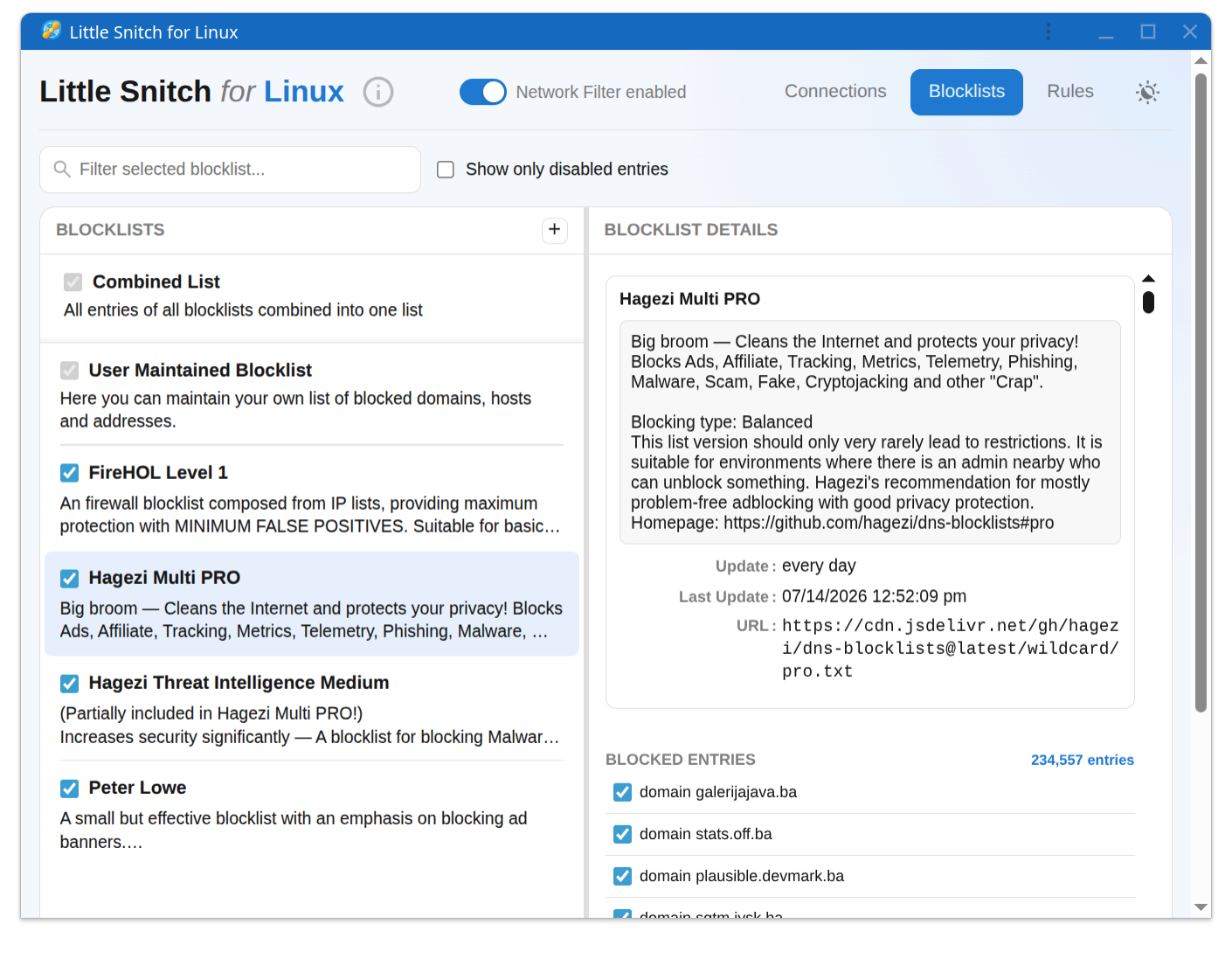
Blocklists let you cut off whole categories of unwanted traffic at once: advertising, tracking, malware domains, and similar. Little Snitch downloads them from remote sources and keeps them current automatically.
Blocklists versus rules
Blocklists and rules complement each other:
- Blocklists work at the domain- host- or IP-level and are maintained by third parties. Subscribe once, and thousands of known tracking or malware sites are blocked for all applications.
- Rules are written by you and can be much more precise: a rule can target a specific process, match particular ports or protocols, and apply to exactly the situations you define. See Writing Your Own Rules.
Supported formats
Little Snitch accepts lists in several common formats:
- One domain per line
- One host name per line
/etc/hostsstyle: an IP address followed by a host name- CIDR network ranges
Not supported are wildcard formats (except the simple *.domain.com form), regex or glob patterns, and URL based formats.
When a list is offered in several formats, prefer the domain based variant over the host based one. Domain lists can be shorter because they can match a class of hosts in one line.
Adding a blocklist
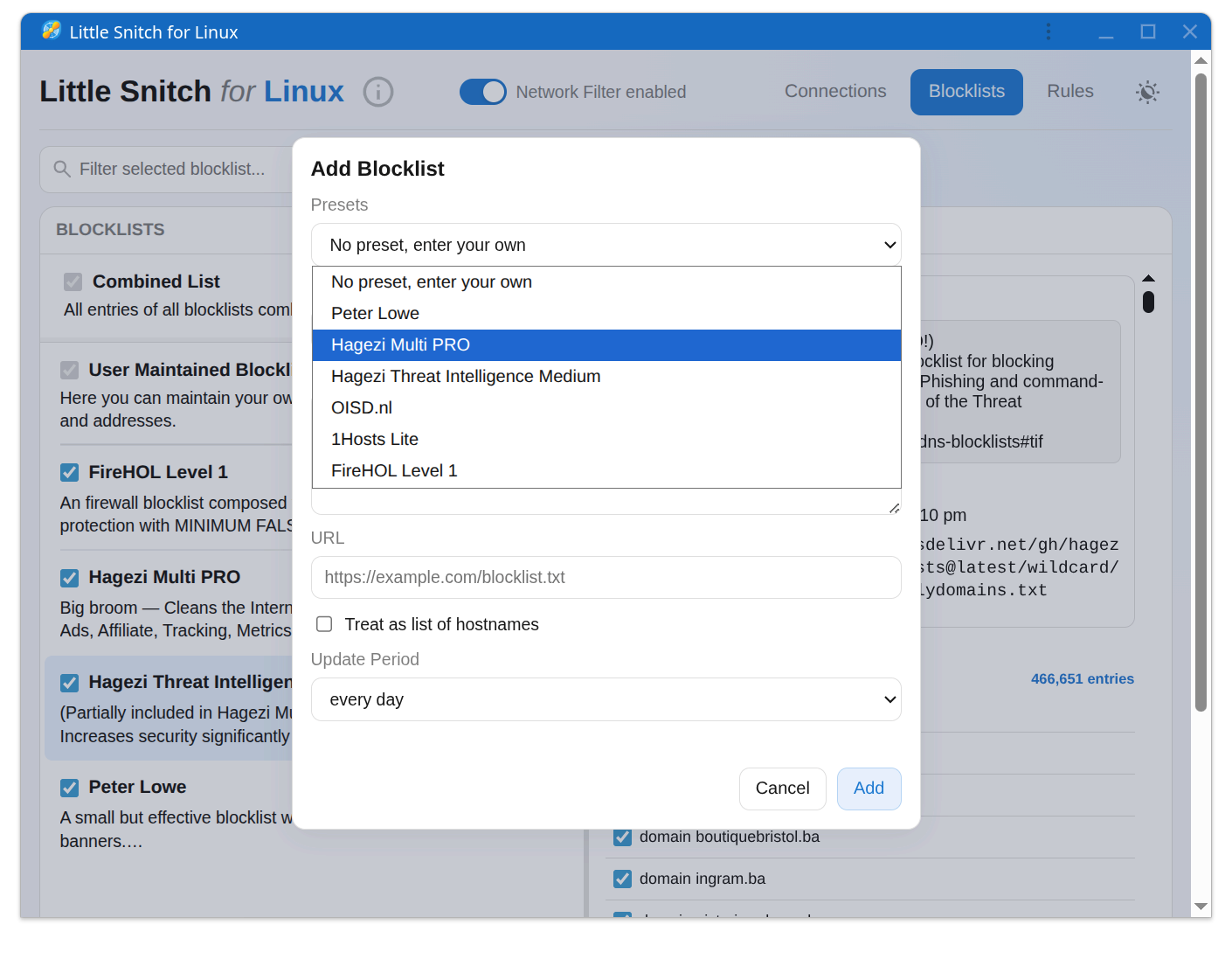
When you add a new blocklist, Little Snitch offers a selection of presets from well known publishers, so you do not have to hunt for URLs. You can also paste the URL of any list in a supported format.
Well known blocklist publishers include Hagezi, Peter Lowe, Steven Black, and oisd.nl. This is a starting point, not an endorsement of specific lists. Which list suits you depends on how aggressively you want to block and how much breakage you are willing to debug.
A note for macOS users
The .lsrules rule group format from Little Snitch on macOS is not compatible with the Linux version. Use one of the formats listed above instead.
Was this help page useful? Send feedback.
© 2016-2026 by Objective Development Software GmbH